Why Are Directors Still Getting This Wrong?
And How to Be a Better Leader on Set
I’m not immune to this. When I directed my first film projects, I made some critical mistakes. Still do. But what’s the point of making mistakes if you don’t grow from them?
I learned a lot during my career as a director but even so, I constantly see other Directors making these exact same mistakes over and over again.
If you want to direct projects that people actually enjoy working on and deliver films that hit the mark, here are the fundamental rules every director needs to master.

A Director Directs
…Don’t Dictates
It’s in the title: Direction means providing a trajectory, not forcing compliance. You don’t just point to the top of the mountain to force your crew to go there. You lead the way by moving first.
Film production is like an ensemble of highly talented creatives working on a single piece of art. It’s an orchestra. Every department head and crew member has spent years mastering their instrument. They’ve practiced, failed, dusted themselves off, and rebuilt their craft to be the best at what they do. Every instrument plays a vital role.
Your job as a director—or conductor, to stick with the metaphor—is to orchestrate these talents. Sure, you might have written the script and possess a crystal-clear vision of how the instruments should harmonize, but it is not your job to play all the instruments yourself.
The Golden Rule: A director creates a playground for creative people, for actors, cinematographers, production designers, and the entire crew and sets the direction. We harmonize individual talents into a single, cohesive masterpiece.
Without an orchestra, there is no music. Without a conductor, it’s just directionless noise.
I’ve been on sets run by unbearable directors who built hierarchies on fear rather than respect. People were yelled at, talent was degraded, and the atmosphere was toxic. Some directors view themselves as absolute deities controlling every frame. Don't be that director.
Respect, openness, and professional leadership are the keys to a project people look back on fondly and a film that radiates the right energy on screen. The more you value the people around you, the more they reflect this with trust. And the more trust they give you, the more you can make your vision a reality, because your cast and crew follow you till the end of the world.
Be Where You’re
Expected to Be
I get it: the urge to help out in every department is strong. I love placing a prop or cranking up a Dino light as much as anyone. But where does it start, and where does it end?
If there’s one vital lesson I’ve learned on set, it’s this: As a director, you belong in only two places—behind your monitor (or at the video-village) or with your actors. Nowhere else. Except you have to go to the toilet…but even then you have to check out and let your AD know at least.
Why shouldn't you be helping out with other departments?
You steal ownership: You hired talented people who know their job better than you do. Let them do it.
You lose your set: The director is the compass of the project. If you are busy helping the grip lay dolly tracks, nobody knows where you are when critical decisions need to be made.
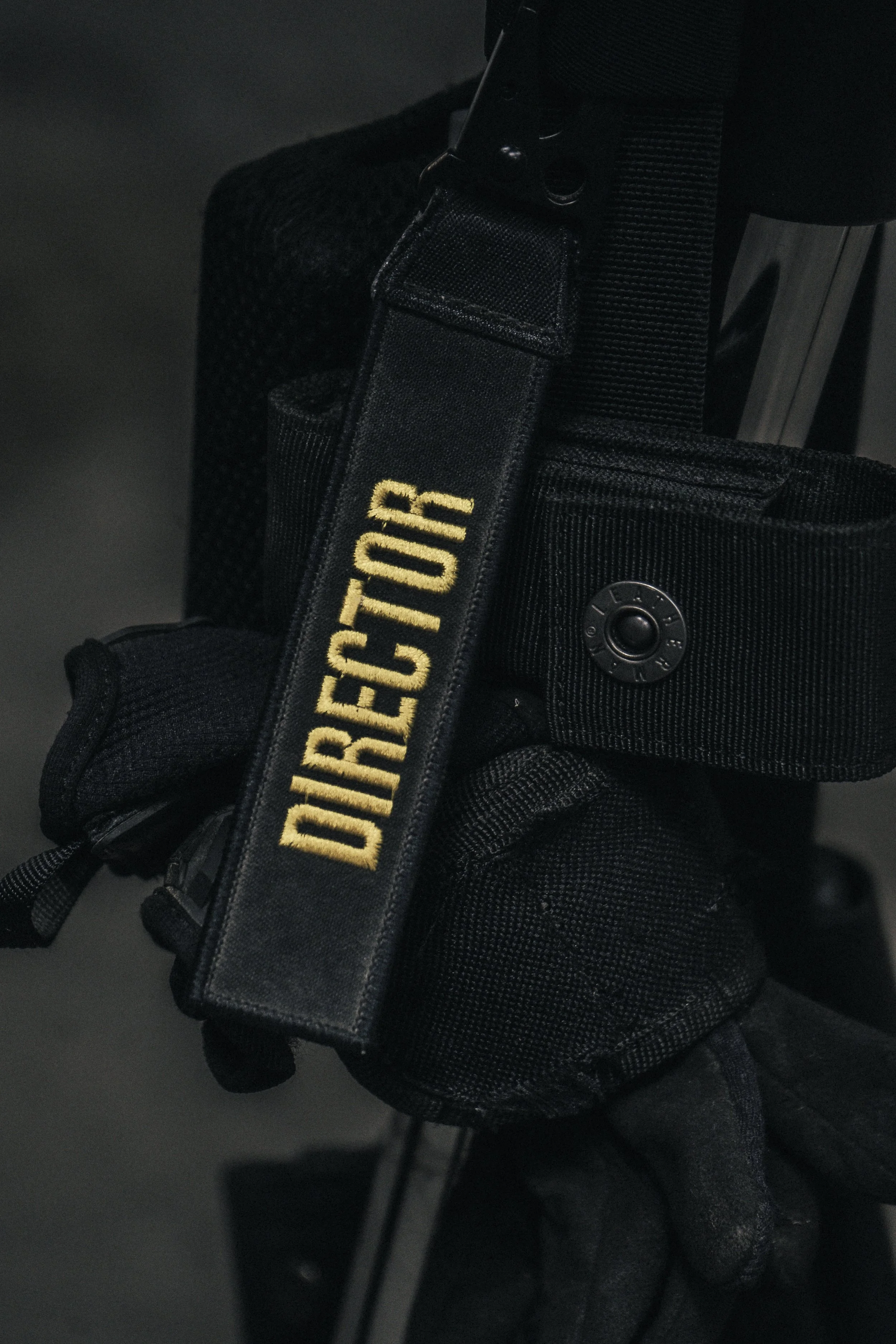
When you vanish, questions go unanswered, or worse: someone else answers them for you. The 1st AD or Producer will take over because the clock is ticking. By trying to be helpful, you render yourself obsolete.
Furthermore, your actors will lose focus and trust. You don’t need to hover over them like a moth to a flame, but you must be readily available when they have questions or need emotional guidance. If you aren't there, other voices (DP, 1st AD, makeup) will step into the void and spoil the broth.
Be where people naturally expect the director to be.
Take Only as Many Takes
as Necessary
Actors rely heavily on your judgment to know when a scene works. Confidence is contagious.
If the first or second take delivers everything the scene needs emotionally and visually, shoot one "for safety" and move on. Don't drain your actors' energy or burn out your crew unnecessarily.
Time on set is ruthless, and every minute saved on a straightforward scene buys you critical time for complex setups later in the day. (Fun fact: Clint Eastwood famously shoots only 1 or 2 takes before moving on, keeping the energy fresh and high). Yeah I know, David Fincher ist the brutal opposite, but at what cost?
Furthermore, don’t let your actors see the playback. WTF? Why?—you might ask. Because they are not the director. You are, and it’s your job to decide when a take is gold. An actor’s perspective is inherently self-critical—they focus on microscopic insecurities like a minor facial twitch, hair falling out of place, or how their profile looks, completely missing the bigger picture. When actors watch playback, they stop feeling the scene and start acting for the monitor, which instantly kills authenticity.
Protect their performance by keeping them away from the screen and trusting your vision instead.
Better Safe Than Sorry
(Check with Your Tech Departments)
Before calling a wrap on a scene and moving to the next setup, perform a quick clearance check with your technical team: “Did we really get that shot?”
Sometimes an actor’s performance is absolute magic, but the focus pulled slightly out, a mic dipped into frame, or a lighting cue flickered. There’s no shame in calling for another take due to a technical glitch…just fix it immediately while you still have the setup lit and ready.
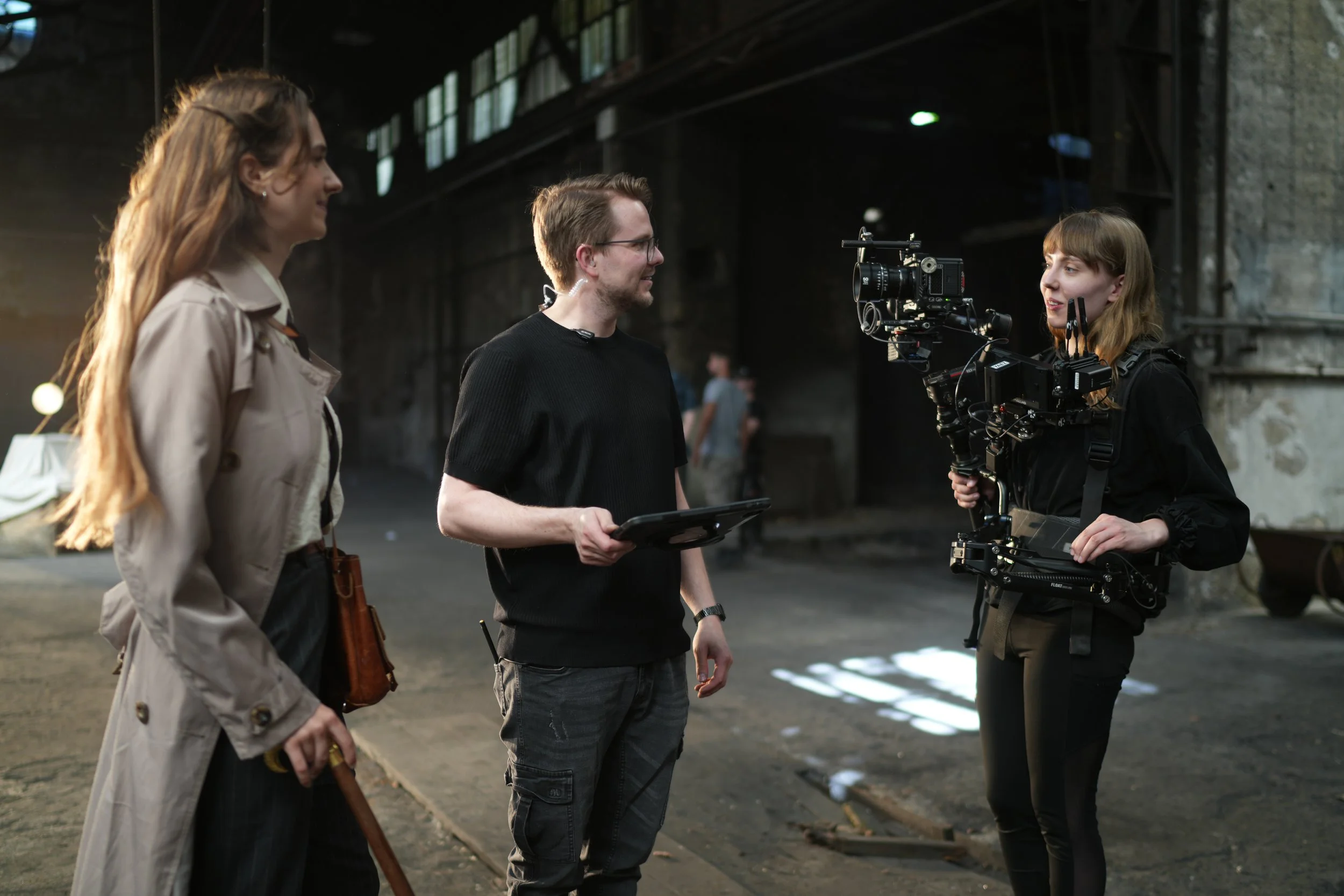
The Better Your Prep,
the Sharper Your Shoot
Precise pre-production yields clarity and confidence on set. Shot lists, storyboards, and clear director’s blockings are safety nets that give you the freedom to pivot when necessary.
Too many directors fall into the trap of using set time as an open workshop. They freeze the production to "chase the creative sauce" holding endless, hushed discussions with their actors while 80 crew members stand around waiting, watching ideas get pitched, tested, and thrown away in real time.
(A famous real-world example: Todd Phillips and Joaquin Phoenix were notorious for this on the set of Joker. While it yielded brilliance on screen, it reportedly drove parts of the crew up the wall because nobody ever knew what was going to happen next).
Make no mistake: nothing ever goes strictly according to plan. But when time is running out, daylight is burning, and you’re only halfway through your schedule, your prep is what saves you. Strong preparation allows you to make rapid, smart tactical sacrifices under pressure without turning your set into a waiting room.
Protect the
Performance Channel
Film sets get chaotic fast. When multiple people offer unsolicited acting notes or conflicting notes to the cast, it creates confusion and dilutes performances.
Establish early on that you are the sole voice giving acting and scene direction.
Technical adjustments such as the DP asking an actor to micro-adjust their body into a key light or step into a frame boundary are completely fine. However, performance, tone, and character choices should always flow directly through you. NO ONE ELSE!
Pro-Tip: Remember that the Hair & Make-Up trailer (or corner) is the ultimate sanctuary for your actors. It is their safe haven on set. A calm space away from the noise, lighting setups, and technical hustle where they can drop their guard, mentally reset, and process their role. Respect that boundary. Never barge in to push heavy notes or create pressure in their safe zone; let them have their peace until they step back onto the floor.
Never Leave Your Cast
Hanging
Your actors just poured their heart and soul into a high-stakes emotional take. The absolute worst thing you can do when you call "Cut!" is to remain silent while looking at your monitor.
Silence feels like rejection.
I experienced this firsthand during an acting class. I jumped into a scene in front of the camera, poured everything into it, and when the scene ended... total silence. No feedback. On purpose of course to teach a lesson. I was absolutely shitting my pants because the voices of self-doupt in my head immediately took over.
Give immediate feedback even if it's just a quick "Great energy, let's go again right away," or "That was the one!" A few reassuring words maintain momentum, build trust, and keep the emotional momentum flowing.
Stay Hydrated
& Clear-Headed
(Seriously!)
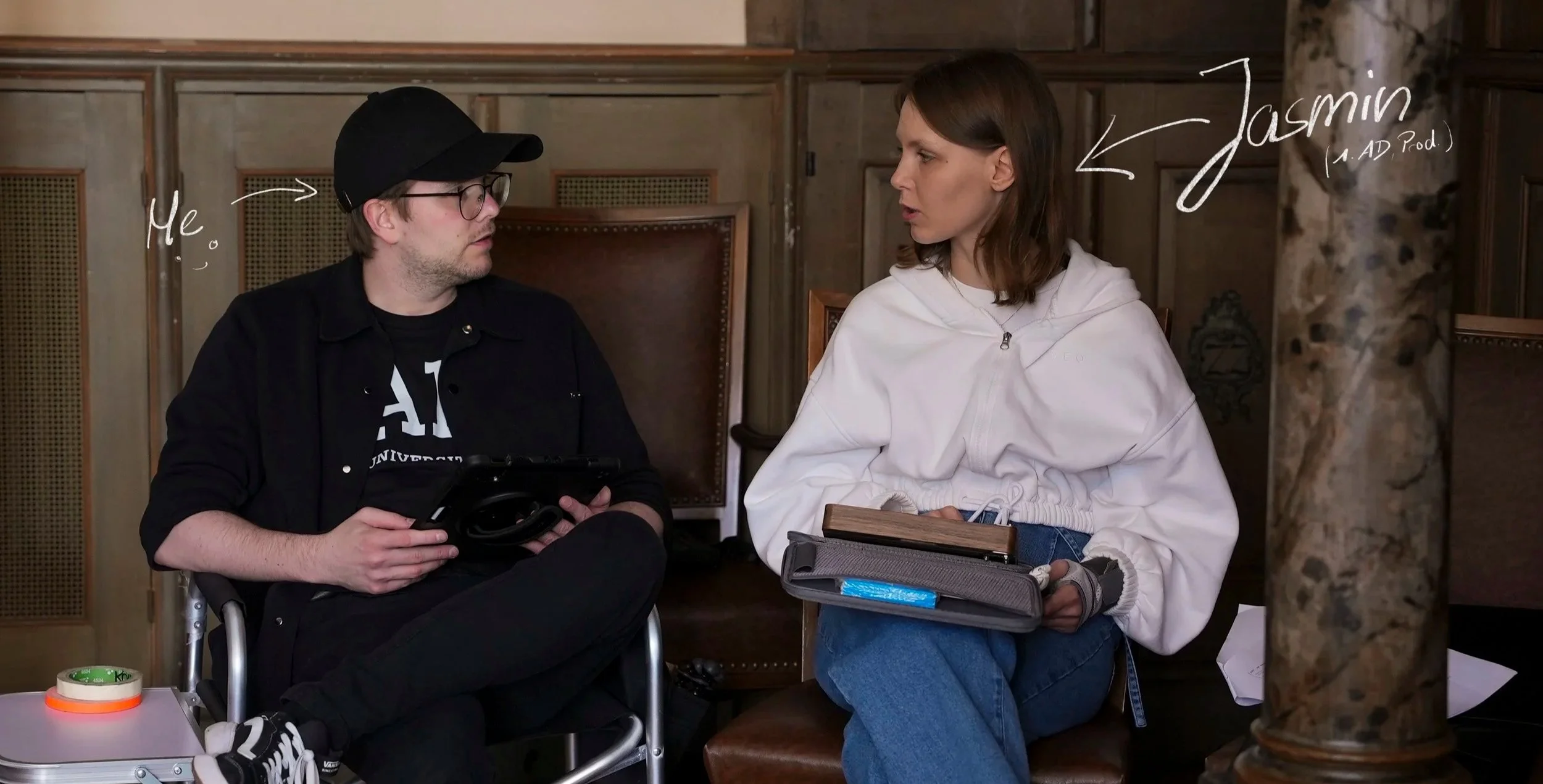
12-hour shooting days, high stress, constant decision fatigue. . .it's easy to forget basic human needs.
Keep a reusable water bottle or thermos on you at all times. Give your assistant explicit permission to remind you to drink and take a bite of food (Thank you Jasmin :D). A fatigued, dehydrated brain cannot make sharp artistic decisions under pressure. Take care of yourself so you can take care of your crew.
Take Care of Your Crew
This Is Non-Negotiable
Your crew works tirelessly to bring your vision to life. They push through long hours, challenging conditions, and demanding physical labor. They show up with dedication for you and the project, so you need to show that same unconditional loyalty in return.
Creating a safe, respectful, and protected work environment is your primary responsibility on set.
This has to be the standard in the industry. Somehow it isn’t. Make sure your 1st AD and Producer are fully aligned with this mindset. As the key figures running set operations and logistics, they must stay vigilant as well. Establish a strict zero-tolerance policy for any form of harassment, discrimination, or inappropriate behavior. Whether it is a subtle boundary violation, a creepy comment, or unwanted physical contact, it must result in immediate removal from the set. No exceptions, no second chances, and no free passes regardless of how critical someone's role might seem.
Protecting your team builds a culture of absolute psychological safety and trust. When your crew knows you genuinely have their back and prioritize their well-being, they will give you their absolute best work every single day.
Final Thoughts
Directing isn't about having all the answers or exerting total control. It’s about creating an environment of respect and clarity where everyone can do their absolute best work.
Lead with vision, trust your team, stay visible, and keep your actors safe. The rest will show up on screen.