Crafting the Lore: Writing from History
How I wrote the Lore for our ambitious fan-short
based on real historic events and myth
The Artifact

Concept Art by me
One of my personal goals for our short fan–film Indiana Jones and the Obsidian Obelisk was to create a brand-new mystical artifact: the Obsidian Obelisk. It doesn’t exist in the official Indiana Jones canon, but I wanted it to feel as if it could stand alongside the Ark and the Holy Grail – not because of its religious meaning, but because of its supernatural power and historical weight.
Here’s a little backstory: The Obsidian Obelisk is made of obsidian, as its name already suggests. Born from the molten lava of Mount Vesuvius in Italy and shaped by an ancient people—older even than the Egyptians—it holds the power to trigger seismic forces. Like a tuning fork, once struck and set upon the earth, it sends the ground around it into violent tremors. Depending on its intensity, it can trigger landslides, volcanic eruptions, and the devastation of entire regions.
The symbols on the artifact really remind you of Egyptian hieroglyphs, and a lot of them are either directly taken from or inspired by them. The only ones that are totally made up are the ones for 'earthquake' and 'Vesuvius'—at least, I think so. The Greek god of the sea, Poseidon, was worshiped by the Romans as Neptune, which is why you see Neptune’s trident on the Obelisk. He was the son of Cronus and Rhea. Originally, he was also in charge of earthquakes, but the Romans kind of took that responsibility away from him.
Why isn’t this in the script?–you might ask. Simply because it’s too much to tell and even harder to show. The original Indiana Jones films never used flashbacks or a long prologue like the Lord of the Rings did to explain how an artifact came into being either. In this case, it wouldn’t have served the narrative, so I cut it and kept the deeper backstory for myself.
Based on true history
Centuries later, the Roman ruler Mark Antony presented the Obelisk to his beloved Cleopatra. With the Obelisk, they were meant to rule for a long time and bring their enemies to their knees [True]. Marcus Aemilius Lepidus, too, had a fleeting affair with her, but his ambitions over Italy brought him into conflict with the third member of the triumvirate—Octavian [Half true]. For his greed he was condemned, stripped of his claim over Italy, and ultimately forced into exile [True]. Lepidus however knew about the power of the Obelisk. According to legend, he fled with the Obelisk’s power in hand and returned it to his eternal love. Some point to the eruption of Vesuvius at that time as evidence [Nah I made that up].
Such, at least, is the theory. Based on fragments of historical events, I have taken the liberty of bending history ever so much to serve our story. For example, Cleopatra’s tomb has never been found to this day. In one scene, where Indy and his companion Karla dig through ancient records and scrolls in search of the Obelisk, I drew a parallel between the history of the artifact and the personal history of Indy and Karla. That gave the scene a deeper layer and revealed more about their characters than it might seem at first glance.
DETAILS MATTER
In preparation, I actually wrote way more than what ended up in the script. For example, I even wrote an entire chapter about the Obelisk for a history book that Karla shows Indy in her office. It only appears on screen for a few seconds, but if you pause at just the right moment, you can actually read it and it all makes sense. I really enjoyed exploring the artifact this way, almost like digging into history myself and carving out the pieces of the puzzle. Pieces that Indy and Karla could later put together on screen.
Yeah, a whole lot of writer brain went into bringing this artifact into existence. It was fun.
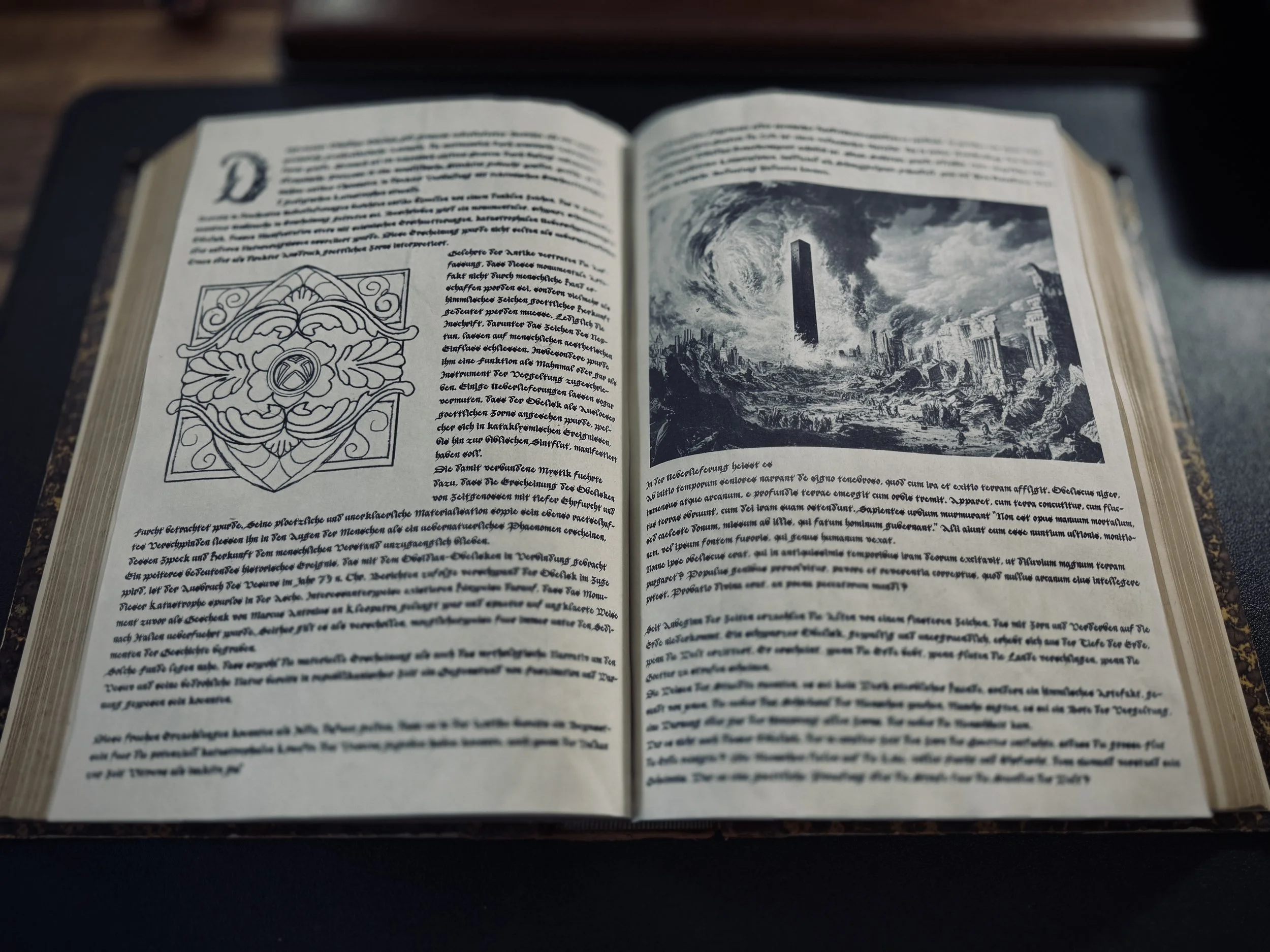
Here’s my finished book prop. Made up of coffee stained paper, glue, hopes and dreams. And fictional history.
Still, the artifact had to be earned in the classic way, by following clues and deciphering hidden mechanisms. For this, I designed a key artifact, that opens a stone pedestal that holds the Obsidian Obelisk within. Since the whole film was originally meant to be inspired by the game, I placed an Xbox symbol in the center of the key. At one point, we even considered a shot from a first-person perspective of Indy to bring it closer to the feeling of gameplay. But eventually, we scrapped those ideas, realizing we wanted to stay closer to the cinematic roots. From a filmmakers perspective it was indeed far more enjoyable to follow in the footsteps of George Lucas and Steven Spielberg, and so the X in the center became more of an Easter egg—both a nod to the console and to the phrase ‘X marks the spot.’ More on that later.
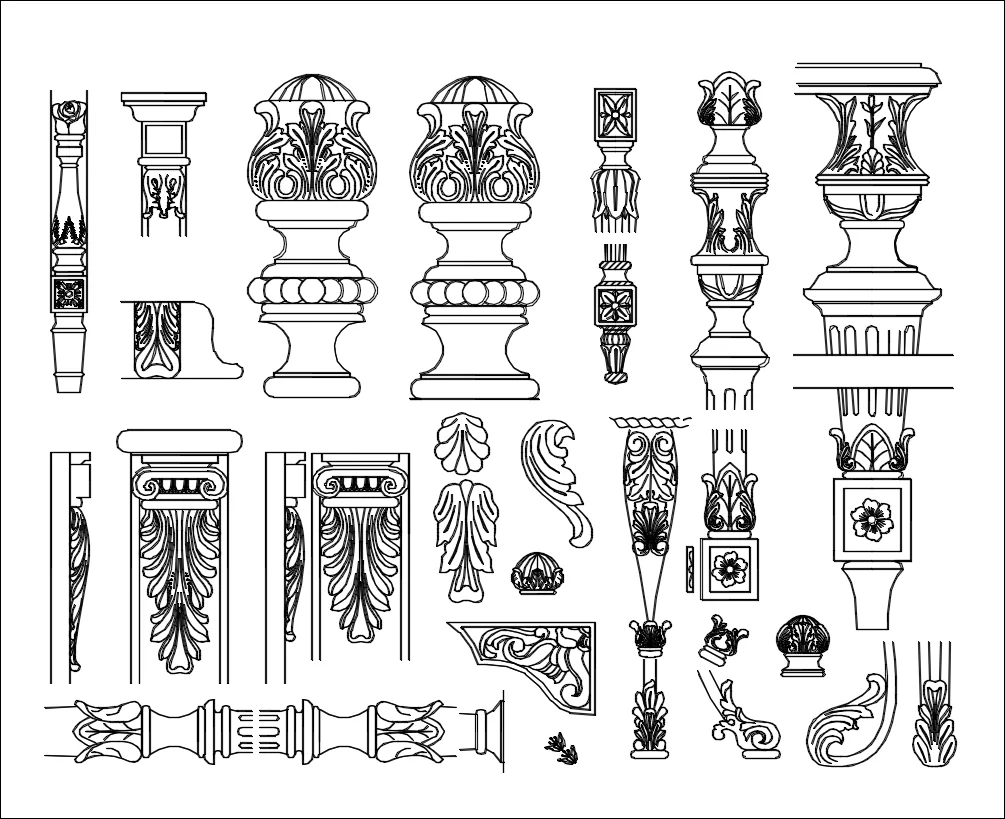
Research on Roman patterns.
We 3D-printed the key artifact and had it painted by an artist called Consti. Great guy. What mattered to me was that it carried Roman like patterns, since the Obelisk was secured in a stone pedestal filled with sand—a structure built later by the Romans and locked with the key. The sand was meant to keep the Obelisk as isolated as possible. That means the key artifact is essentially a Roman tool.
The inscription on the back was meant to provide the first clue and set the whole adventure in motion. To communicate my vision I drew a concept sketch of the key artifact. Sonja –our 3D Artist– modeled the artifact and Konstantin 3D-printed and painted it.
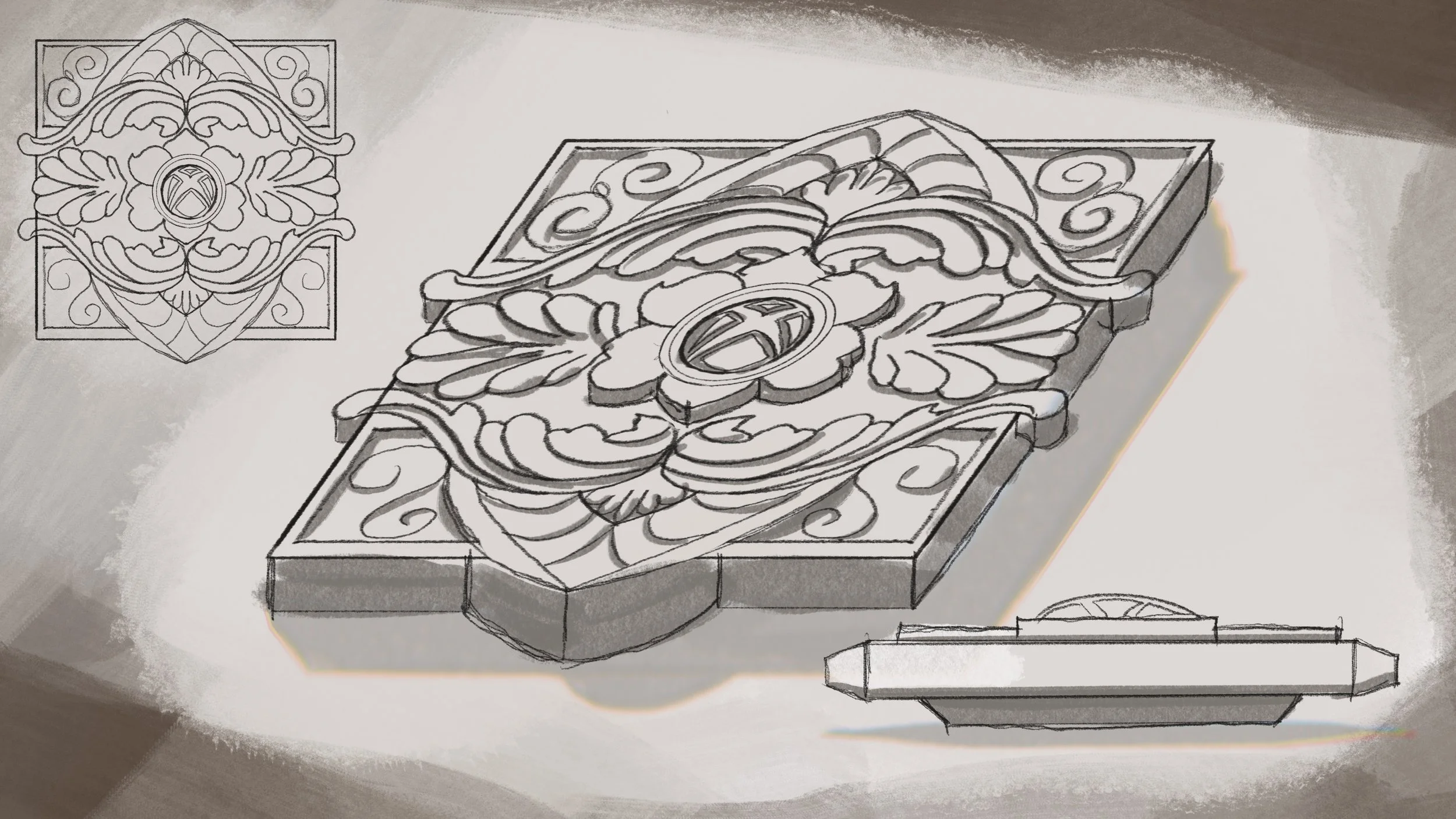
Concept Art by me
Personal Note: Thanks to Sonja for modeling the Artifact in 3D and to Konsti for printing it out and painting it all by hand!
A TRIBUTE TO THE GAME AND CONSOLE
Talking about XBOX: When Indiana Jones and the Great Circle was first announced, a limited-edition Xbox Series X was unveiled alongside it. I used this exclusive console design as a primary reference for our artifact and its pedestal, the latter of which serves as a visual tribute to the Xbox’s rectangular silhouette.
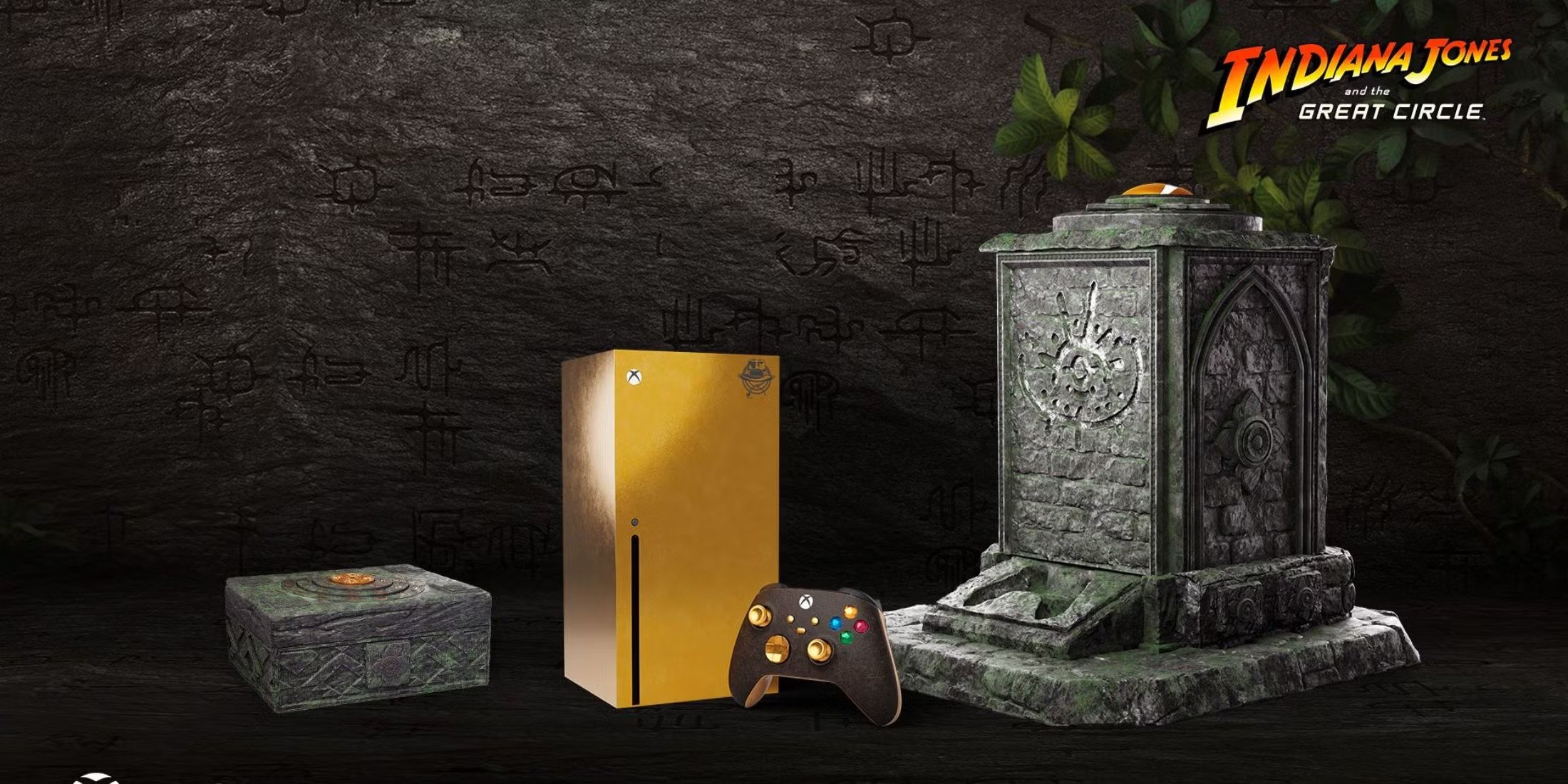
Exclusive XBOX Series X design - - I mean this is really cool.
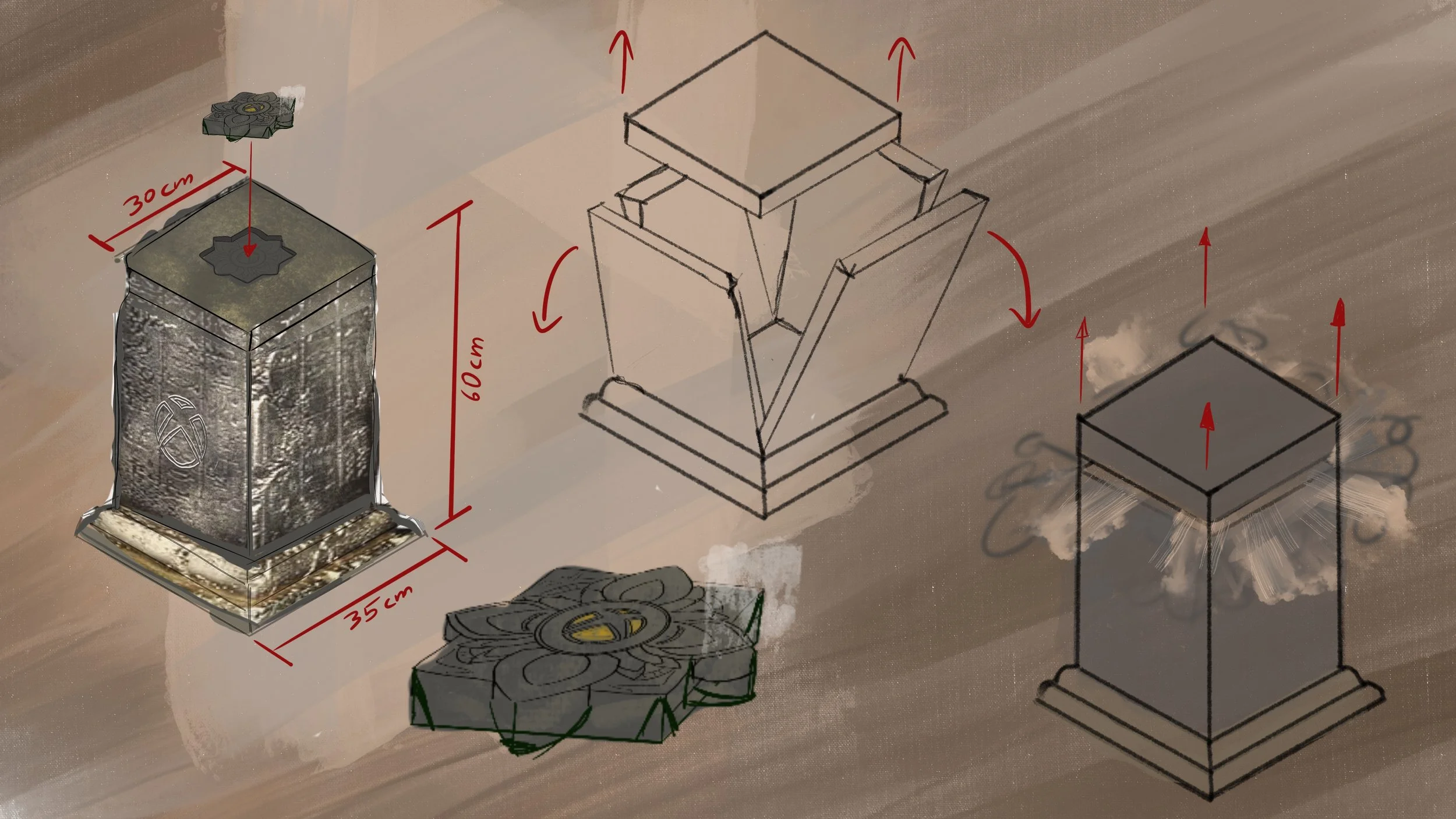
My design and explanation of the mechanics of the pedestal.
Why? – You may ask. It’s simple. This design is intended as a nod of respect for the game and the creative team behind it. It would be an honor if they were to see our film, and maybe even consider a collaboration with us in the future. One can always dream.
KEY TAKEAWAYS:
As a writer and director, I believe that the depth of a world is defined by what remains unseen. Developing more than what eventually makes it onto the screen creates a 'narrative iceberg'. A solid foundation that provides the cast and crew with a profound sense of purpose. By carving out every piece of this historical puzzle, I’ve established a foundational understanding of the stakes, ensuring that every frame we do show is backed by the weight of a lived-in reality.
In an era of hyper-connected pop culture, addressing an audience that lives and breathes these worlds is essential. Fans of the games and films possess an incredible eye for detail. We wanted to honor the visual language they love. It’s about rewarding their passion with a level of authenticity that proves we aren't just telling a story, but contributing to a legacy they and we as well care about deeply.
How it turned out is up to you to decide.